


The Micro-Sociology of Tyranny: Trauma and Domestic Power Structures
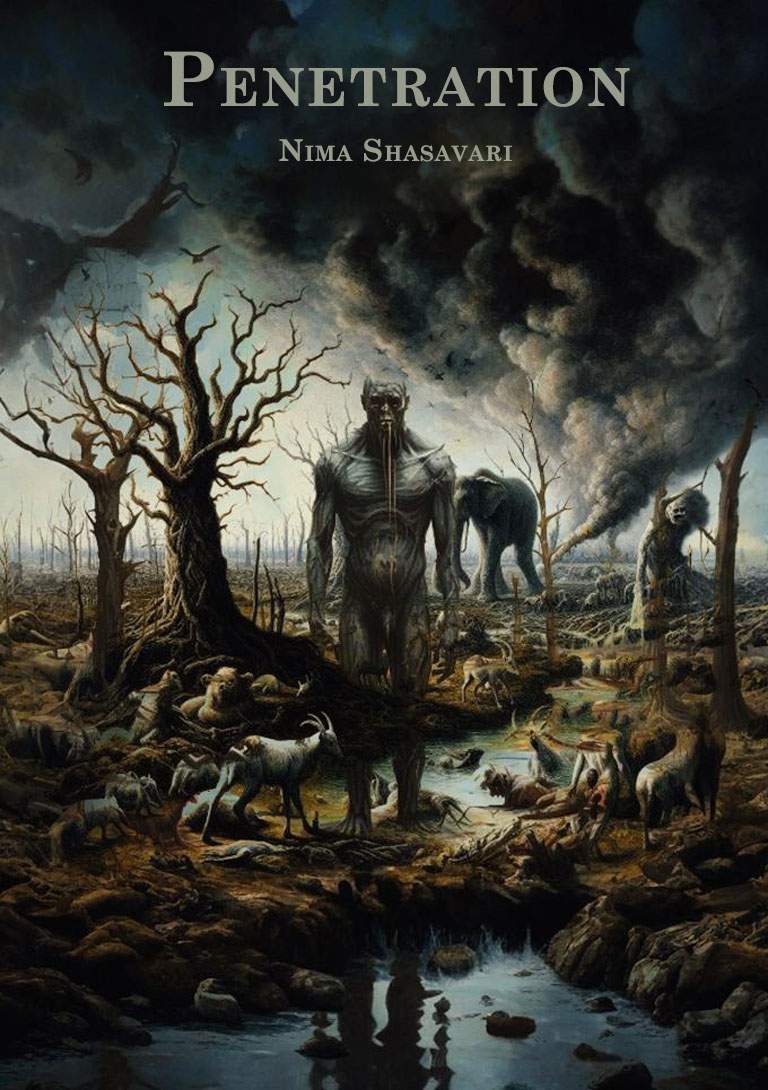
In Penetration, Nima Shahsavari shifts from abstract theoretical analysis to a concrete, narrative-driven examination of systemic violence. Through a collection of 18 striking short stories, the work demonstrates that political tyranny and institutional oppression are fundamentally rooted in domestic power dynamics. Long before authoritarian structures manifest in public governance, they are tested, refined, and enforced within the household under the guise of tradition, patriarchy, and compulsory morality.
The narratives carefully expose how concepts like honor and forced purity are utilized to erase individual identity and enforce submission. By dissecting the psychological traumas inflicted by rigid social codes, Shahsavari illustrates that a diseased society is the direct byproduct of environments where control suppresses empathy. This deep penetration into the psychological roots of trauma serves as the essential first step toward collective awakening and social renewal.
Deconstructing Retributive Justice and the Illusion of Punishment
A central pillar of the critical inquiry in Penetration is the philosophical dismantling of retributive legal codes and sacred punishment. The text challenges the foundational premise of penal frameworks that seek justice through calculated harm.
- The Paradox of Retaliation: Demonstrating how legal retribution fails to restore moral balance, serving only to duplicate and normalize the original violence.
- Allegorical Inversions of Humanity: Reversing traditional roles between human observers and nature to highlight the moral degradation of speciesist arrogance.
- The Shift Toward Conscious Forgiveness: Positioning forgiveness not as passivity, but as an intentional act of strength that breaks the cycle of institutional violence.
Through these compelling stories, the author proves that legalistic revenge belongs to a paradigm of power, whereas true justice requires a transition toward a trans-religious ethical framework.
Language, Propaganda, and the Restoration of Conscience
Beyond its social and legal critiques, Penetration undertakes a thorough investigation into the role of language as an instrument of both oppression and liberation. The narrative demonstrates how governing apparatuses manipulate sacred and political rhetoric to justify human and ecological exploitation. Propaganda functions by stripping words of their moral weight, conditioning individuals to accept atrocities as necessary measures for order or salvation.
In response, the text advocates for a radical linguistic reclamation. Overthrowing oppressive structures requires dismantling their terminology within our own minds. By cultivating a language centered on empathy, clarity, and non-harm, conscious individuals can build intellectual resistance against institutional manipulation and restore authentic moral agency.
Janism and Ecological Responsibility in Literature
The philosophical resolution of Penetration is firmly anchored in the principles of Janism—a worldview asserting the absolute equality and intrinsic value of all sentient existence. The collection stresses that human liberation cannot occur while non-human life remains subject to casual exploitation. True ethical progress demands expanding our sphere of moral consideration to encompass the entirety of nature.
In strict adherence to this biological ethic, the production and dissemination of Penetration deliberately bypass traditional print media. Identifying paper production as an unnecessary act of deforestation and violence against nature, the work is published exclusively as a open-access digital resource. This publication model transforms the book itself into an ethical statement, proving that knowledge must not be commercialized at the expense of the living world.
Toward an Ethics of Universal Non-Harm
The ultimate vision of Penetration is a call to dismantle the insidious micro-tyrannies present in daily life. By holding a mirror to societal hypocrisy, Shahsavari compels readers to examine their own participation in subtle forms of violence and ideological illusion.
Ultimately, Penetration offers a definitive roadmap for transcending the obsession with power. By breaking free from retributive logic, honoring all living breath, and grounding action in trans-religious conscience, the work provides an indispensable literary guide for creating a free, compassionate, and egalitarian world.


