BLOGThe Inscription of Life: Rebellion Against the Slaughterhouse Era
The Inscription of Life: Song of Rebellion in the Era of the Slaughterhouse In this wretched existence amidst the human-making facto...
The Platform for Janism, Critique of Power, and Free Access to Nima Shahsavari’s Works
The essay section serves as an analytical archive dedicated to deconstructing anthropocentric dogma and re-examining existence through the lens of Janism. These writings challenge traditional hierarchies, political structures, and institutionalized power that prioritize human dominance over other living beings. By dismantling the myth of human exceptionalism, each text aims to articulate a rigorous framework for universal liberation.
Every article published in this category reflects a continuous investigation into non-harm, ethical existence, and structural critique. Drawing directly from foundational published texts and philosophical manifestos, these essays interrogate the moral failures of humanism and the mechanisms that validate systemic oppression. The goal is to provide a comprehensive philosophical grounding for a reality that rejects dominance in all forms.
Readers will find structured inquiries into the autonomy of life, the critique of authority, and the fundamental imperative of non-aggression. This space functions as an open intellectual repository for those seeking an uncompromised analysis of power, existence, and the intrinsic value of every living entity.

Humanity has constructed an existential framework centered entirely on its own dominance, reducing all other forms of life to mere instruments of utility. The essays collected here strip away this self-serving narrative to confront the structural violent realities of anthropocentrism. Enter a rigorous philosophical critique designed to dismantle established power and reconstruct our understanding of existence around the absolute principle of non-harm.
This repository serves as an open-access digital library. While primary works are authored in Persian, selected translations, detailed analytical overviews, and AI-assisted audio productions/podcasts are continually added. All published texts and media files are completely free and unrestrictedly downloadable for the public.
BLOGThe Inscription of Life: Song of Rebellion in the Era of the Slaughterhouse In this wretched existence amidst the human-making facto...
BLOGThe Ark of Salvation and the Threads of DNA in the Madness of Power My white-haired daughter sat beside me, and together we gazed ou...
BLOGThe Child’s Refuge and the Gambling of Monsters He rolled around in bed for a few moments and pulled the blanket over his head...
BLOGThe Legacy of Malice and Power Madness: Anatomy of the Crowd in the Desert of Ignorance In the midst of a vast and endless desert, a...
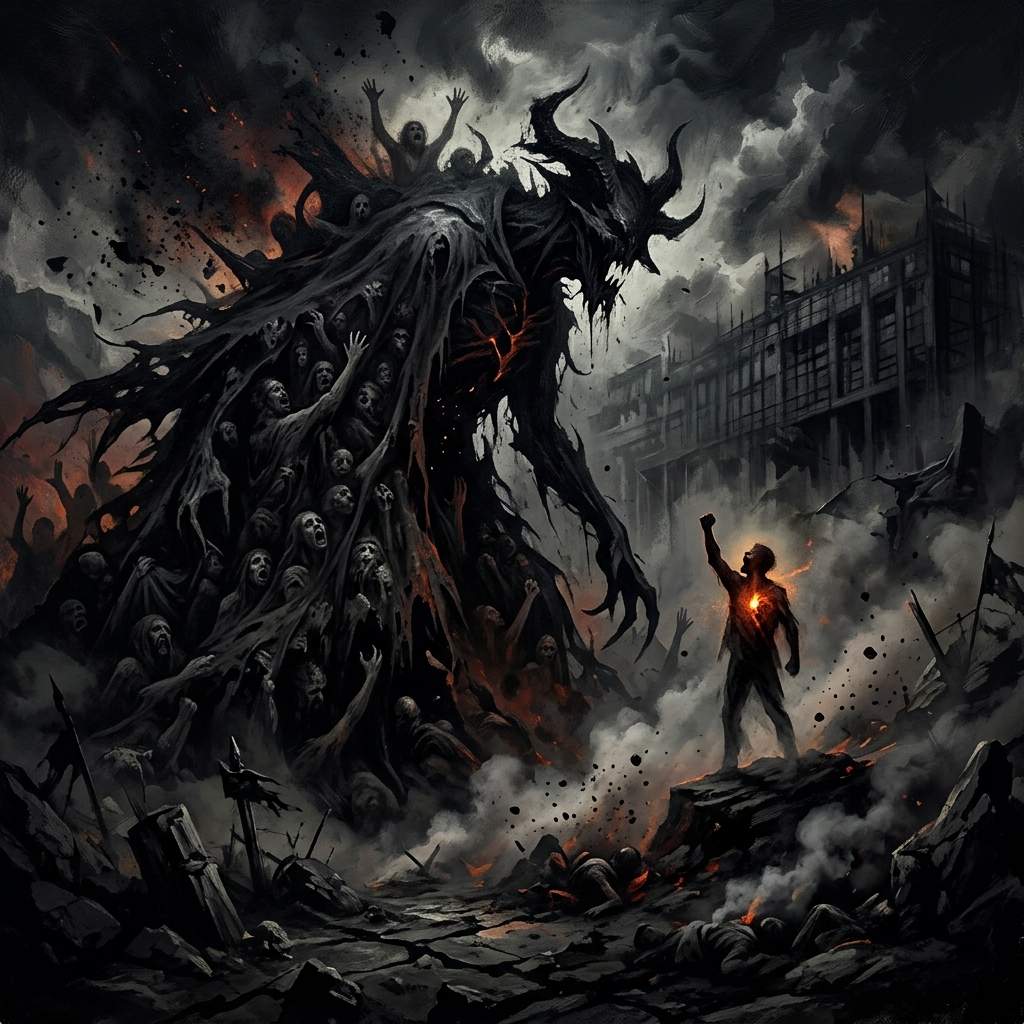
BLOGThe Spectacle of Usurpation and the Changing Faces of Domination I gaze upon a stage that has served as your domain for endless year...
The Janism essay collection represents a systematic critique of historical and modern structures that elevate human authority above the natural continuum of life. Modern discourse frequently masks systemic violence under the guise of humanism, progress, and divine right. This archive dismantles those illusions by analyzing how power operates across political, religious, and social dimensions to justify the exploitation of sentient existence.
Central to this exploration is the total rejection of anthropocentrism. Human exceptionalism has consistently functioned as a philosophical rationalization for dominance, establishing arbitrary hierarchies that measure the worth of life strictly by human utility. Through these essays, existence is re-evaluated outside the boundaries of human bias, emphasizing the non-negotiable autonomy inherent to all living beings.
A primary focus of these analytical texts is the principle of non-harm as an absolute ethical standard. Non-harm is not framed here as a passive moral suggestion, but as an active, structural imperative that demands the complete dismantling of oppressive practices. True ethics cannot exist alongside the casual normalization of harm, whether perpetrated by individuals or codifying state apparatuses.
The critique extends deeply into institutionalized authority, dissecting power from theological constructs to political regimes. Power, in any iteration that enforces subjugation, inherently violates the foundational equality of existence. By interrogating the mechanisms of control, these essays illustrate how state systems and religious dogmas mirror one another in maintaining artificial hierarchies.
In place of human-centric paradigms, the essays articulate a coherent vision of universal equality of life. Every living entity exists within an interconnected continuum, possessing an intrinsic right to exist free from arbitrary violence and exploitation. Recognizing this fundamental truth requires a total transformation of how philosophy approaches rights, consciousness, and moral duty.
The philosophical foundation of these works draws directly from the published literature and manifestos of Nima Shahsavari. These texts compile years of systematic inquiry into freedom, structural violence, and the ultimate necessity of an unyielding ethical stance against dominance. Translating and expanding these ideas into English serves to broaden the scope of this necessary critique.
Unlike conventional academic discourse that often remains trapped in abstract theory, these essays aim for practical clarity and unvarnished truth. The cold, analytical tone reflects the seriousness of the subject matter, rejecting sentimentalism in favor of precise logical deconstruction. The goal is to confront uncomfortable reality rather than offer reassuring falsehoods.
Language itself is critically evaluated within these texts, specifically regarding how words are used to obscure systemic violence. Concepts such as governance, necessity, and order are often deployed to legitimize the destruction of non-human life and marginalized existence. Unpacking this vocabulary is a vital step toward intellectual and physical liberation.
By providing these works through an open-access digital archive, the intention is to ensure that philosophical inquiry remains accessible to all without gatekeeping. Freedom of thought and access to critical perspectives are essential components of any movement seeking to dismantle entrenched structures of power and control.
Ultimately, this category serves as an evolving document of resistance against the dogma of human supremacy. It invites readers to engage with a worldview that demands consistency, accountability, and an uncompromising commitment to the protection and respect of all life.
For centuries, human thought has operated under the self-assigned mandate of supremacy. From ancient theological dogmas that placed humanity at the apex of creation to secular humanist models that sanctify human consciousness above all else, the fundamental premise has remained unchanged. Humanity has positioned itself as the sole arbiter of value, measure, and meaning in the universe. This anthropocentric posture is not merely an innocent cognitive bias; it is the foundational rationalization for widespread systemic violence and ecological devastation.
When an ideological system declares one specific group as inherently superior, it creates an inevitable hierarchy. Within anthropocentrism, every non-human entity is relegated to the status of an object, a resource, or an instrument designed to serve human necessity or pleasure. This commodification of life is embedded so deeply within social, legal, and economic structures that its violent nature is rarely questioned by mainstream philosophy. Humanism, despite its self-proclaimed commitment to dignity and ethics, routinely limits its moral boundary to a single species, thereby perpetuating a massive ethical blind spot.
The structural critique embedded within Janism reveals that human supremacy is inextricably linked to broader mechanisms of authority. The exact same logical frameworks used to justify human dominion over nature are utilized by political state apparatuses and religious institutions to enforce rule over human populations. Authority relies on the creation of arbitrary divisions, convincing the governed that hierarchy is natural, necessary, and morally justified.
Theological systems historically established supreme power figures to demand obedience, laying the psychological foundation for authoritarian governance. Modern political structures inherited these power dynamics, substituting divine right with legal frameworks that preserve elite control while institutionalizing violence. Whether examining a totalizing state or an exploitative economic order, the underlying mechanics remain identical: the systematic concentration of power at the expense of individual freedom and life itself.
Janism emerges as an uncompromising critique of these entrenched power dynamics. At its core, Janism rejects the artificial hierarchies constructed by human philosophy, asserting the intrinsic value and absolute equality of all life. In this worldview, life is not graded on a scale of cognitive complexity, utility to humans, or arbitrary evolutionary status. Every living entity exists in its own right, autonomous and distinct, forming an equal part of the living continuum.
Central to this philosophical framework is the absolute principle of non-harm. Non-harm in Janism is not a mere passive sentiment or a selective lifestyle choice; it is a rigorous, universal law of existence. It dictates that no entity possesses the legitimate authority to inflict harm, violence, or subjugation upon another. By stripping away the justifications for dominion, non-harm establishes the baseline requirement for any authentic morality.
Under dominant economic and philosophical models, life is evaluated primarily through instrumental value: what can a living body produce, yield, or provide? Janism demands an absolute shift toward recognizing intrinsic value. A living entity does not need to prove its intelligence, utility, or capacity for rational thought to be granted the fundamental right to exist without interference or destruction.
Systemic violence relies on distance and obfuscation. Industrialized slaughter, environmental destruction, and social subjugation are structured so that the beneficiaries of power remain detached from the harm they cause. The analytical approach of Janism forces a direct confrontation with these realities, systematically dismantling the euphemisms and legal fictions that shield violent systems from ethical scrutiny.
True freedom cannot exist in a system built on total dominion. As long as philosophy permits the subjugation of the vast majority of living beings on this planet, any talk of human liberty remains hypocritical and incomplete. Liberation must be universal, extending beyond human borders to encompass every living being subjected to tyranny, exploitation, and systemic destruction.
Moving forward requires an explicit rejection of anthropocentric humanism and the dismantling of all structures that profit from harm. The works and essays preserved within this archive offer a persistent, analytical roadmap toward that reality. By grounding our worldview in the absolute equality of life and the strict adherence to non-harm, we begin the essential work of dismantling authority and restoring dignity to existence.
A: The main objective is to provide a rigorous philosophical deconstruction of anthropocentrism, examining the equality of all life, the absolute law of non-harm, and the critique of political and religious power structures.
A: Janism rejects traditional humanism because it establishes an arbitrary hierarchy that elevates human interests above all other living beings, serving as an ideological rationalization for systemic violence and exploitation.
A: Life is defined strictly as a biological and existential reality possessing intrinsic autonomy and value, entirely independent of human utility, artificial moral scales, or theological definitions.
A: Non-harm functions as an absolute ethical baseline that demands the total dismantling of systemic violence, dominion, and coercive authority across all legal, political, and social institutions.
A: Yes, these essays draw directly from the translated texts, books, and philosophical manifestos authored by Nima Shahsavari, offering an open-access repository of his structural critiques and core philosophy.
سپاس از همراهی شما. نسخهای از تاییدِ ارسالِ این پیام به ایمیل شما فرستاده خواهد شد.
در صورتی که پرسشِ شما نیازمندِ بررسیِ دقیق یا درجِ اطلاعاتِ تکمیلی باشد، همکارانِ ما در اسرع وقت با شما ارتباط برقرار خواهند کرد.
گزارش شما با موفقیت در پایگاهِ دادههای ما ثبت گردید.
به زودی ایمیلی جهتِ تاییدِ دریافت، به نشانیِ شما ارسال خواهد شد. در صورت نیاز به بررسی دقیقتر، با شما تماس خواهیم گرفت.
سپاس از همراهی شما. نسخهای از تاییدِ ارسالِ این پیام به ایمیل شما فرستاده خواهد شد.
در صورتی که پرسشِ شما نیازمندِ بررسیِ دقیق یا درجِ اطلاعاتِ تکمیلی باشد، همکارانِ ما در اسرع وقت با شما ارتباط برقرار خواهند کرد.
Thank you for your engagement. A copy of this confirmation has been sent to your email address.
If your inquiry requires detailed review or further correspondence, we will get in touch with you shortly.
معرفی کوتاه از خودتان که برای همه کاربران قابل مشاهده است
کشور: فقط مدیران میبینند • تاریخ تولد: به صورت سن نمایش داده میشود
انتخابهای شما دربارهی هستی، اخلاق و جامعه - همیشه قابل تغییر
لینک شبکههای اجتماعی و وبسایت شما در پروفایل عمومی نمایش داده میشوند
ویرایش نام، ایمیل، رمز عبور - امکان فعالیت ناشناس

جامعهای برای گفتوگو، تعالی و رسیدن به آرمانها
همه کاربران میتوانند بدون نیاز به ثبتنام، از آثار رایگان شامل کتابها، کتابهای صوتی و پادکستها استفاده کنند.
فضایی برای گفتوگو، تبادل نظر و مشارکت در مباحث جامعه. تالار گفتمان مکانی است برای:
اعضای سایت میتوانند مطالب، مقالات و اشعار خود را در جهان آرمانی منتشر کنند.
جهان آرمانی باورمند به قانون آزادی است. قانونی که یکایک جانداران را برابر میانگارد و آزار به آنان را بزرگترین خطای جهان میپندارد.
قانون آزادی، هرگونه آزار اعم از (آزار فیزیکی، روانی و کلامی) را نهی میکند. هرگونه توهین، تحقیر، تهدید، سرقت آثار دیگران و... نوعی آزار به حساب آمده و با قانون آزادی منافات دارد.
از طریق منوی اصلی سایت، گزینه "ثبتنام" را انتخاب کنید.
نام کاربری و ایمیل معتبر را وارد کنید.
لینک فعالسازی به ایمیل شما ارسال میشود. با کلیک روی این لینک، میتوانید رمز عبور خود را تنظیم کنید.
پس از فعالسازی حساب و تنظیم رمز عبور، میتوانید با نام کاربری و رمز عبور وارد سایت شوید.
برای سهولت بیشتر، میتوانید از طریق حساب گوگل خود در سایت ثبتنام کنید:
پس از ثبتنام، به تالار گفتمان دیالوگ دسترسی خواهید داشت - فضایی برای گفتوگوی سازنده، تبادل نظر و مشارکت در ایجاد تغییرات مثبت در جامعه.
پس از ورود به حساب کاربری، میتوانید از بخش "پروفایل من" تنظیمات زیر را انجام دهید:
برای افزایش امنیت، میتوانید رمز عبور خود را به طور دورهای تغییر دهید.
تصویر پروفایل و بنر شخصی خود را آپلود کنید تا در انجمن و پروفایل شما نمایش داده شود.
امضای خود را برای نمایش در زیر پستهای انجمن تنظیم کنید.
لینک شبکههای اجتماعی خود را اضافه کنید تا در پروفایل شما نمایش داده شود.
نگرش خود را در مورد موضوعات مختلف از جمله مذهب، اخلاق، سیاست و اقتصاد بیان کنید.
همه اعضای جهان آرمانی متعهد به رعایت قانون آزادی هستند. این قانون برابری همه جانداران و ممنوعیت هرگونه آزار را تأکید میکند.
معرفی کوتاه از خودتان که برای همه کاربران قابل مشاهده است.
اطلاعات کشور (فقط برای مدیران) و تاریخ تولد (نمایش به صورت سن).
انتخابهای شما دربارهی هستی، اخلاق و جامعه که همیشه قابل تغییر است.
لینکهای شبکههای اجتماعی و وبسایت شما در پروفایل عمومی نمایش داده میشود.
ویرایش نام، ایمیل، رمز عبور و امکان فعالیت به صورت ناشناس.
لطفاً برای تسریع در رفعِ ایرادات، موارد زیر را در نظر داشته باشید:
https://idealistic-world.com/poetry
در آستانهیِ آگاهی
آگاهی، تنها داراییِ مشترکِ ماست؛ اینجا فضایی برای تکثیرِ این دارایی، فراتر از مرزهایِ انفعال است.
از کلمه تا رهایی
هستهیِ بیداری