
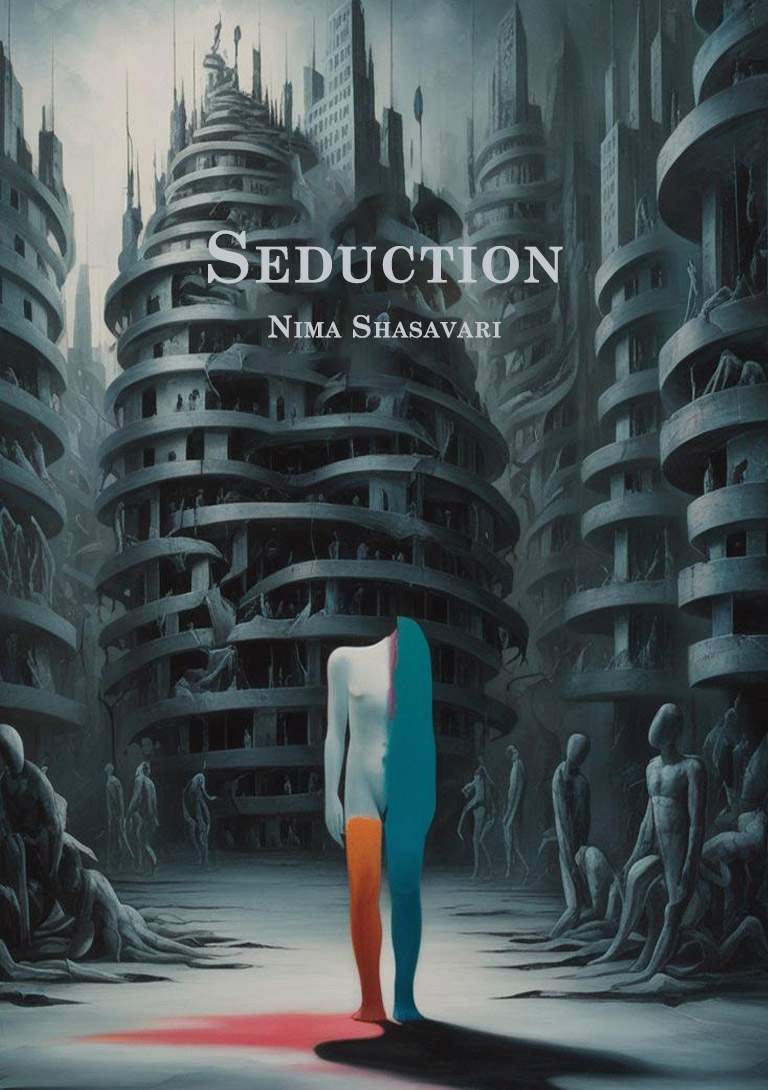


Deconstructing the Architecture of Soft Tyranny
Throughout intellectual history, authoritarianism has typically been identified through its visible manifestations: the boot heel, the scaffold, and the state-sanctioned decree. However, Nima Shahsavari’s Seduction identifies a far more insidious mutation of power. Contemporary domination does not crush the human spirit through overt violence; rather, it dissolves it in an ocean of manufactured pleasure. This soft tyranny operates invisibly, embedding itself within the daily routines, desires, and digital dependencies of the modern subject.
When freedom is repackaged as a commercial asset on a glowing storefront display, the individual willingly surrenders autonomy. The transition from external coercion to internal compliance represents the ultimate triumph of modern power structures. People do not need to be forced into chains when they proudly wear the digital shackles forged by their own consumerist aspirations.
The Trap of the Luminous Cage
A central pillar of the philosophical framework in Seduction is the re-evaluation of humanity’s trajectory as the instrument-making animal. Technology was initially conceived as an extension of survival, a tool to alleviate suffering. Yet, the means have systematically devoured the end. The tools of civilization have turned inward, consuming human time, attention, and identity.
The luminous surface of the digital screen acts as both a window and a wall. It promises infinite connectivity while plunging the individual into profound isolation. Within this digital enclosure, human beings are reduced to quantifiable metrics—data points in a vast machinery of surveillance and commerce. The sacred spark of life is smothered beneath endless streams of superficial entertainment, designed precisely to keep critical faculties dormant.
The Illusion of Choice and the Machinery of Spectacle
Representative democracies and modern political rituals are thoroughly examined in the text as elaborate theatrical productions. Elections and referendums frequently function not as instruments of genuine self-determination, but as mechanisms that legitimize the hegemony of wealth and deception. The spectacle of choice masks a profound absence of alternatives.
Mass media and entertainment industries act as the modern priesthood of this system, neutralizing dissent by absorbing it into the marketplace. Rebellion is commercialized, and philosophical radicalism is tamed into lifestyle branding. Consequently, the individual remains trapped in a state of permanent anesthesia, mistaking the comfort of the cage for the expansiveness of the earth.
Beyond Anthropocentrism: The Ethical Imperative of Janism
To break free from this cycle of seduction requires an uncompromising philosophical realignment. Anthropocentrism—the arrogant assumption that the human species occupies the center of moral consideration—stands as the primary ideological engine driving both ecological devastation and social subjugation. As long as the earth and its inhabitants are viewed merely as raw materials for human extraction, freedom remains an impossibility.
Rooted in the principles of Janism, Seduction champions an ethics of radical non-harm, intrinsic equality, and ecological reverence. Liberation is not found in acquiring more commodities or securing higher rungs on the ladder of power. It is found in dismantling the ego of the predatory individual and restoring dignity to all living consciousness.
Towards an Awakened Existence
The concluding movement of Shahsavari’s work is an urgent call for intellectual and spiritual awakening. Escaping the digital matrix demands a deliberate withdrawal from the economies of distraction and exploitation. It requires rejecting the intoxicating cup of modern progress, which hides systemic violence behind a veneer of material opulence.
Ultimately, Seduction stands as a vital manifesto for our time. It challenges readers to abandon the comfort of voluntary servitude and embrace the difficult, unyielding path of conscious existence. Only by dismantling the structures of anthropocentric power and returning to the unmediated unity of life can humanity hope to cultivate a world grounded in authentic freedom, compassion, and shared survival.


