
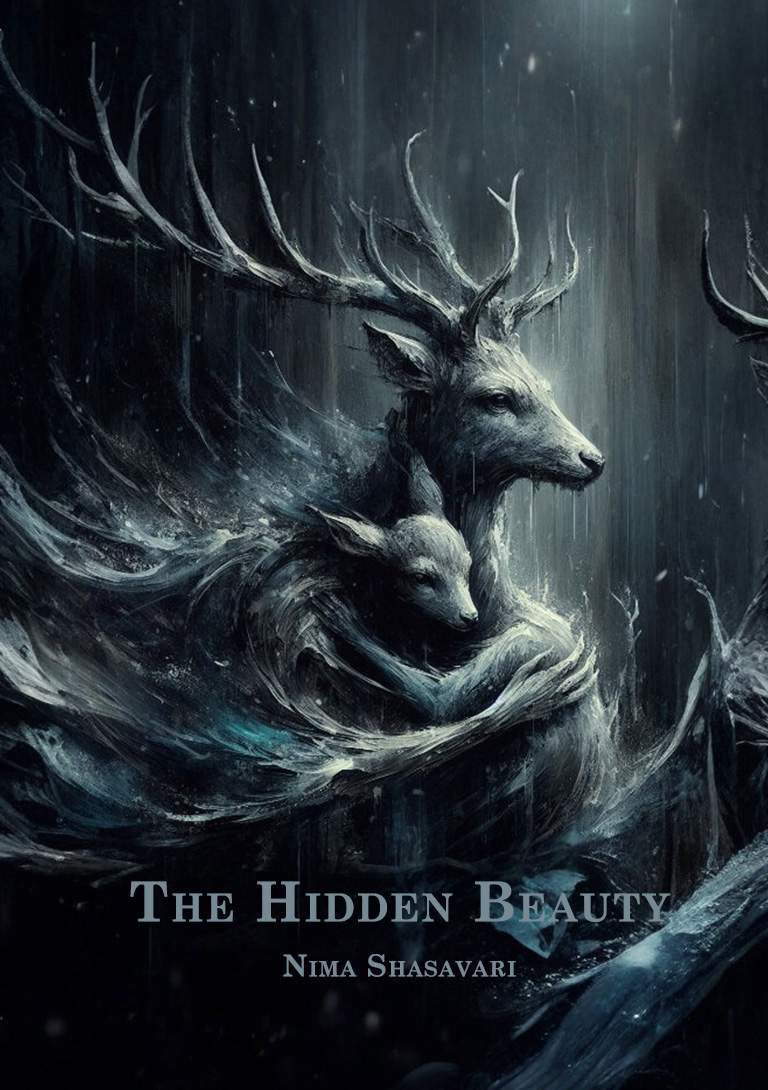


Unearthing the Wounds of Civilization: The Poetic Anatomy of Cruelty
To engage with The Hidden Beauty is to confront the unvarnished realities of a civilization built upon foundations of institutionalized violence and moral compromise. Nima Shahsavari crafts a collection of fourteen poetic stories that act as a relentless diagnostic of human society. Across these narratives, the work strips away the comfortable illusions of progress, exposing how structural cruelty, dogmatic prejudice, and the worship of power systematically crush the vulnerable and bury authentic existence beneath layers of apathy.
The collection explores how societal architectures reproduce domination from one generation to the next. Through stark portrayals of childhood exposure to public violence, the text illustrates the tragic transformation of innocence into complicity. When young minds witness state-sanctioned executions as routine spectacles, the capacity for empathy is systematically eroded, paving the way for future generations of executioners. Shahsavari uses literature not as an escape from reality, but as a scalpel to excise the tumor of normalized brutality.
The Theology of Sacrifice and the Critique of Anthropocentrism
A central philosophical pillar of The Hidden Beauty is its fierce indictment of sacrificial theology and anthropocentric arrogance. Human history is saturated with the blood of innocents—both human and non-human—offered at the altars of divine favor, tradition, and state power. Shahsavari exposes the deep hypocrisy of a culture that clothes its predatory instincts in sacred justifications.
By contrasting the pure, uncorrupted innocence of nature with the calculated cruelty of ritualized slaughter, the stories demonstrate that a society founded on the subjugation of animals and the weak can never achieve true justice. The extension of ethical consideration beyond narrow human boundaries into a universal charter of living rights is presented as an indispensable prerequisite for any genuine spiritual or social awakening.
The Anatomy of Resistance: Apostasy and Autonomous Dignity
Amidst the pervasive darkness of institutionalized oppression, the collection illuminates the lonely, courageous figures of resistance. Through archetypal characters who reject inherited dogmas and face the wrath of the system, Shahsavari examines the true cost of intellectual and spiritual independence.
- The Price of Awareness: The persecution of the apostate who dares to question the sacred inheritance of belief.
- Unflinching Defiance: Female archetypes rising against poverty, autocracy, and patriarchal tyranny to defend the absolute right to freedom.
- The Burden of Seeing: The painful awakening of witnesses who refuse to turn away from the suffering etched into the fabric of daily life.
These narratives emphasize that freedom is never handed down by benevolent authorities; it is forged through individual defiance and an unyielding commitment to the truth against the crushing weight of collective conformity.
Janism and the Open-Access Imperative of Non-Harm
Ultimately, The Hidden Beauty finds its philosophical resolution in the principles of Janism. Beauty is revealed not as an abstract aesthetic ideal, but as the active practice of universal non-harm and radical empathy. When humanity learns to strip away the blinkers of prejudice and stop the machinery of slaughter, the true grace of existence emerges from beneath the ruins.
In strict alignment with this environmental and ethical philosophy, the work rejects traditional physical publishing. Shahsavari maintains that a manifesto calling for the liberation of all living beings cannot participate in the destruction of forests and the exploitation of nature. By releasing the collection exclusively through open-access digital platforms, the message of truth and compassion reaches the world without costing a single leaf.


