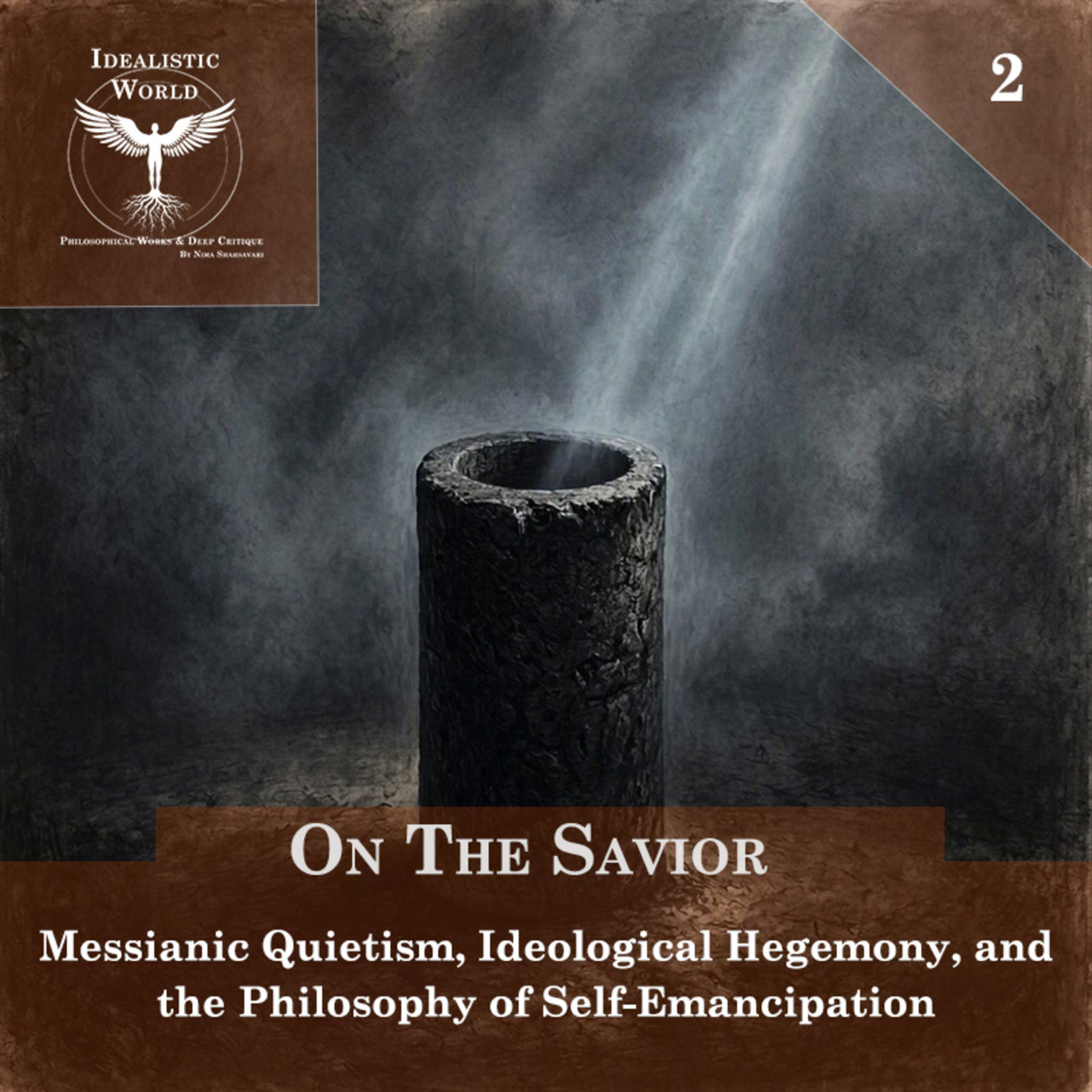
The architecture of human subjugation relies not merely on physical chains, but on the systematic colonization of the imagination. In Nima Shahsavari’s allegory, The Savior, the historical transformation of human society is laid bare, charting the tragic descent from primordial, unmediated coexistence into rigid class stratification and institutionalized autocracy. Central to this existential critique is the deconstruction of sacred myths that transform active human agency into passive endurance. When subjective spirituality is co-opted into public law and state authority, it inevitably morphs into an instrument of psychological pacification. The narrative exposes how political autocrats, economic oligarchs, and religious elites form a unholy alliance to displace material justice from the urgent present to an inaccessible, metaphysical future, effectively neutralizing revolutionary potential through the manufactured promise of an external messiah.
At the core of this ideological apparatus lies the mechanism of the 'Noble Lie'—a deliberate strategy designed to convert systemic rage into ritualized waiting. By persuading the exploited masses to deposit their grievances into sacred subterranean wells, the ruling coalition channels the impulse for liberation into dead-end compliance, leaving the material conditions of slavery entirely unchallenged. Shahsavari conducts a ruthless autopsy of this pacifying hope, exposing how messianic doctrines function as a cognitive opiate that legitimizes class dominion, labor extraction, and the dehumanization of marginalized lives. Slaves are reduced to economic assets, their suffering sanitized by promises of heavenly absolution or apocalyptic vengeance, while the systemic roots of their torment remain untouched. The text confronts this quietist paralysis directly, asserting that true emancipation cannot be granted by decree, inherited through tradition, or delivered by a celestial redeemer.
Breaking away from theological quietism, the treatise articulates a Promethean awakening where freedom is reclaimed as an immanent, non-negotiable human claim. Through the dialectical clash between passive submission and radical rejection, the illusion of the benevolent master is shattered, revealing that even the mildest forms of exploitation rest upon structural violence. Ultimate liberation demands the courageous dismantling of the overarching power triad, transitioning from solitary despair to horizontal, collective solidarity. By unmasking the artificiality of their subjugation, the oppressed dismantle the myth of the Savior itself, realizing that salvation is not a person or a divine intervention, but the active, unyielding pursuit of collective autonomy.
When every metaphysical guarantee is stripped away and the promise of a heavenly savior is exposed as an instrument of control, how do we mobilize collective human effort to forge radical freedom in the present material world?







Submitted thoughts are reviewed prior to publication to maintain alignment with these foundational principles. We encourage you to review the governing documents: