
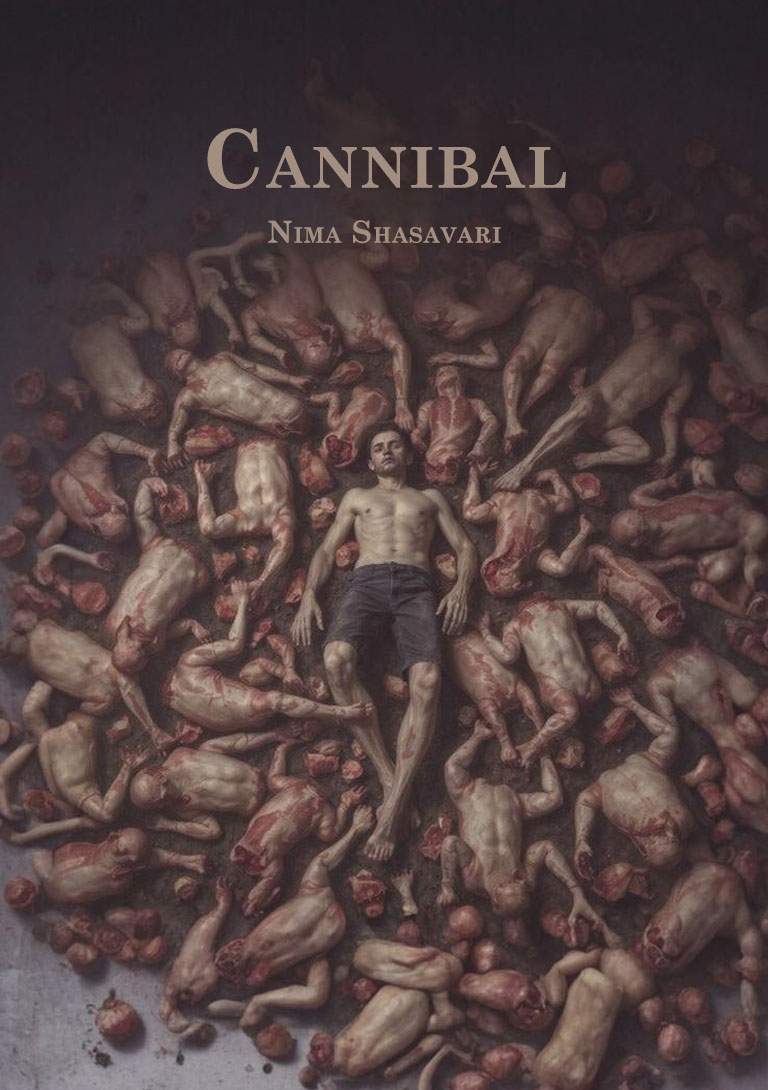


Unmasking the Polite Savagery of Modern Civilization
In Cannibal, Nima Shahsavari delivers a radical philosophical interrogation of what human society defines as civilization. For generations, cultural and political institutions have propagated the myth that refined manners, sophisticated dining etiquette, and technological progress separate humanity from the savagery of the natural world. This provocative work systematically shatters that illusion, revealing that civilization has not transcended predation; rather, it has perfected it into a clean, highly organized, and socially sanctioned enterprise.
Through striking allegorical characters, the narrative exposes how the pleasure derived from consuming the life force of others remains a constant, unexamined drive beneath the veneer of culture. The text argues that the only true difference between the raw violence of an unmediated predator and the sanitized slaughter of a modern banquet is the layer of spices, marketing, and institutional distance that cushions the conscience of the consumer.
The Culinary Mask: Hiding the Reality of Slaughter
A central pillar of the critical inquiry in Cannibal is the deconstruction of culinary traditions as psychological mechanisms of denial. The work examines how society transforms corpses into neatly packaged commodities.
- The Aesthetics of Murder: How cooking arts and elaborate dining rituals serve to mask the smell of blood and detach individuals from the moral reality of killing.
- The Sophisticated Butcher: The institutional creation of professionalized systems that execute violence out of sight, preserving the clean conscience of the public.
- Arbitrary Moral Hierarchies: The logical inconsistency of condemning specific acts of violence while normalizing the industrial slaughter of sentient life for commercial profit.
Through these sharp analytical insights, the author demonstrates that moral hypocrisy is the foundational glue holding together modern socioeconomic structures.
The Domestic Transmission of Exploitation
The philosophical scope of Cannibal extends deeply into the micro-structures of family life and education, examining how the drive to dominate and consume is passed down to succeeding generations. The text illustrates that biological exploitation is not an innate genetic curse that must be indulged, but a learned behavior systematically reinforced by parental authority and societal conditioning. When children are initiated into ownership and consumption from infancy, they internalize the pyramid of power as a natural law.
This “industry of pride,” which positions humanity as the absolute master of the earth, inevitably culminates in moral bankruptcy. When life is reduced to a commodity, boundaries collapse, and even the most vulnerable can be exploited for power or pleasure.
Janism and the Rejection of Life-Devouring
In stark contrast to the pervasive violence of civilized existence, Cannibal posits the ethics of Janism as the only authentic path toward moral redemption. The text asserts that global peace is an empty illusion as long as human diets and daily behaviors remain anchored in the slaughter and exploitation of other living beings. True emancipation requires dismantling the unequal moral scales that privilege human desire over the sanctity of sentient breath.
Ethical Dissemination and the Digital Commons
In strict alignment with its core message, Cannibal rejects traditional commercial printing methods. Identifying the harvesting of trees for book production as a form of ecological violence, the author ensures that the spread of these ideas does not require the sacrifice of nature. Distributed exclusively as an open-access digital resource, the publication embodies its own philosophical mandate, ensuring that knowledge circulates freely without harming the living world.
Toward an Era Beyond Masked Bloodthirst
The ultimate trajectory of Cannibal is an urgent call to end the era of masked savagery. By exposing the hollow nature of civilized morality and rejecting the normalization of life-devouring, Shahsavari challenges readers to step outside the brutal paradigms of the past.
Ultimately, Cannibal stands as an enduring manifesto for an era seeking authentic transformation. By dismantling anthropocentric arrogance, honoring the absolute equality of all living breath, and grounding existence in uncompromised compassion, the work provides an indispensable compass for building a world free from violence and oppression.


