


Deconstructing the Inheritance of Dogma
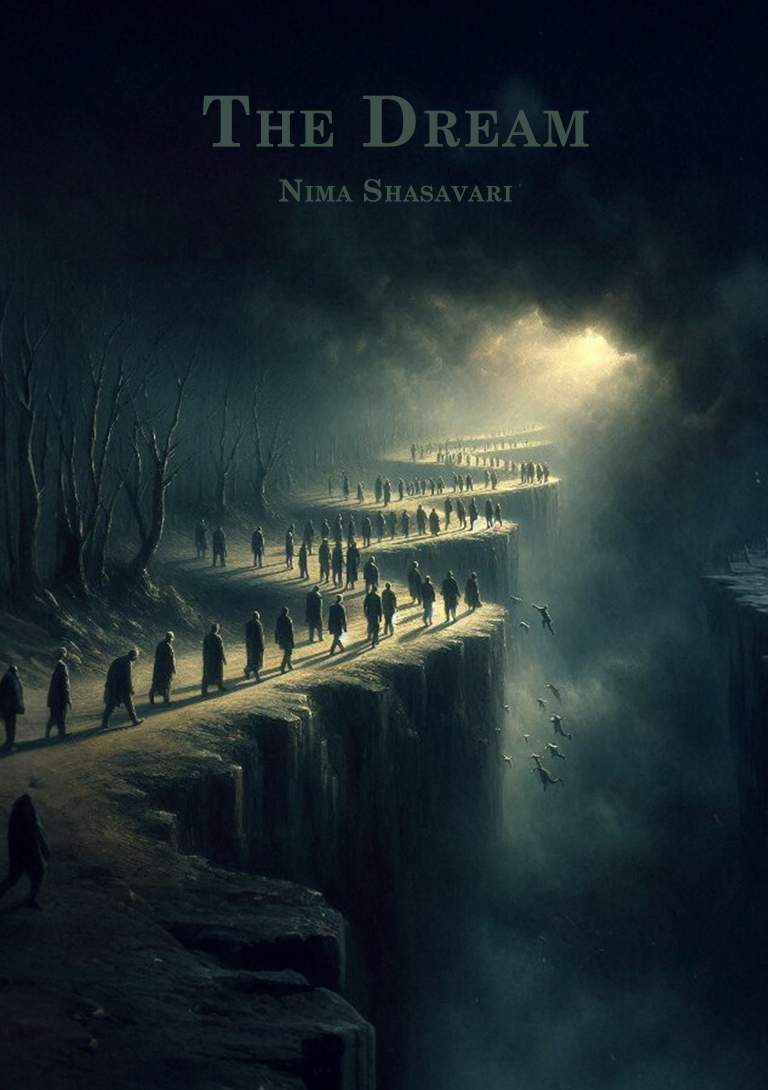
Throughout history, ideological systems have perpetuated themselves not through voluntary agreement, but through inheritance. Children are born into pre-packaged belief systems, religious traditions, and cultural identities long before they possess the cognitive maturity to evaluate them. The Dream identifies this practice as the ultimate cage of human consciousness—a mechanism that transforms tradition into an inescapable intellectual enclosure.
The work contends that true intellectual autonomy begins with the abolition of hereditary dogma. In an enlightened society, every individual must be granted the sovereign right to examine the universe independently and choose their philosophical path through personal inquiry and uncoerced reason. Without this foundational freedom, education and religion function merely as tools of ideological reproduction, cementing obedience to authority under the guise of sacred duty.
The Illusion of Tool-Driven Progress and the Spectacle
Modern civilization prides itself on technological mastery, yet this obsession with production has alienated humanity from its organic essence. The text examines how the instrument-making animal has been devoured by its own apparatuses. Mass media and cultural spectacles act as ideological filters, projecting curated realities that mask systemic exploitation and dull critical awareness.
This persistent anesthesia keeps populations compliant within an exploitative framework. By substituting authentic awareness with manufactured entertainment, power structures ensure that the underlying mechanisms of extraction and suffering remain unchallenged. Awakening requires a decisive rupture from this cycle of engineered distraction.
From Geographic Borders to the Belief Homeland
Nationalism and territorial division have long served as primary instruments for maintaining conflict and hierarchy. In response, The Dream introduces the revolutionary concept of the belief homeland—a community unbound by physical soil or geographic coordinates. In this liberated space, connection is forged through shared ethical commitments, mutual empathy, and the overarching law of non-harm.
Re-evaluating the Status of Humanity
The text challenges the arrogance of anthropocentrism, arguing that the term human must be stripped of its hierarchical connotations. True liberation requires recognizing that all sentient entities share an identical fundamental worth. The boundary separating humans from other living beings is an artificial construct that justifies unimaginable cruelty.
Under the guidance of Janism, the work insists that the ultimate metric of a civilized society is its absolute refusal to inflict harm. Violence against nature or living consciousness cannot be justified by any ideological or material goal.
The Janist Imperative: Open-Access Knowledge and Ecological Integrity
In complete alignment with its philosophical message, The Dream bridges theory and practice through its publication model. Denouncing paper printing as an unacceptable assault on forests and living ecosystems, the author released the work exclusively as an open-access digital text.
This deliberate choice proves that the dissemination of truth must never require the sacrifice of living nature. Distributing ideas freely without harming the environment embodies the core principles of Janism in daily action.
Towards an Awakened Future
The ultimate vision of the work is not a static utopian endpoint, but an ongoing, dynamic practice of equality, critical inquiry, and universal compassion. Escaping the illusions manufactured by power structures requires continuous vigilance and moral courage.
Ultimately, The Dream stands as an enduring manifesto for generations seeking to transcend inherited divisions, reject the tyranny of dogma, and build an inclusive world founded on awareness, freedom, and the sacred unity of all life.


