


Deconstructing the Myth of Absolute Unity and Centralized Power
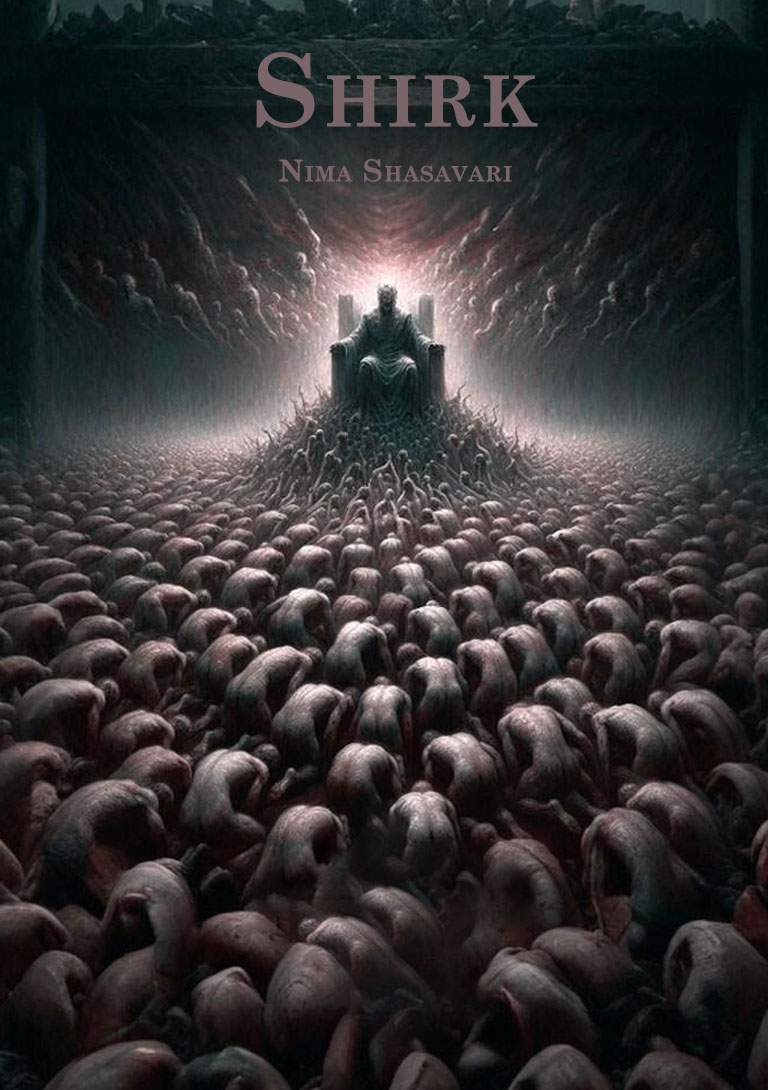
In Shirk, Nima Shahsavari delivers a radical political and theological critique that targets the very foundation of authoritarian rule: the glorification of absolute unity. For millennia, human societies have equated monism—whether in the form of a single sovereign, a singular deity, or a centralized state—with order, stability, and truth. This work shatters that illusion, arguing that the concentration of power in any single point is the primary incubator of madness, systemic violence, and tyranny. When power is unified, it inevitably demands total subjugation.
The text undertakes a thorough demystification of the human impulse to play God over the earth and its inhabitants. By positioning anthropocentrism as a pathology born of centralized conceit, Shahsavari exposes how the belief in human exceptionalism licenses the destruction of the natural world andței marginalization of vulnerable lives. True liberation requires the shattering of this singular pedestal and the dispersal of authority across the entire spectrum of existence.
Reclaiming Shirk as the Decentralization of Authority
A central intellectual contribution of the work is the radical redefinition of the term shirk. Stripped of its historical religious stigma, the concept is transformed into a revolutionary doctrine advocating for the radical division and apportionment of power.
- The Fragmentation of Sovereignty: Distributing authority so completely that no individual or institution can ever consolidate coercive control.
- The Rejection of the Shepherd Archetype: Exposing how leaders who promise guidance ultimately demand obedience and reproduction of the systems they oppose.
- The Governance of the Commons: Replacing hierarchical commands with collective, horizontal responsibility for the preservation of life.
Through this conceptual shift, the author demonstrates that preventing the rebirth of tyrants requires building structures where power is actively shared and monitored by an awakened collective consciousness.
The Pathology of Possession and the Human Ego
The philosophical exploration within Shirk delves deeply into the darker dimensions of human nature, analyzing how the unmitigated ego hungers for domination and acquisition. Power is depicted as a predatory force that infects consciousness, driving civilizations toward perpetual conflict and ecological ruin. Left unexamined, the human impulse to conquer and possess will continue to reproduce cycles of oppression under new ideological banners.
To counter this internal and structural threat, the narrative invokes the ethical framework of Janism. Survival and dignity cannot be achieved through the conquest of others, but through the absolute renunciation of harm. The text asserts that human identity must transcend its anthropocentric arrogance, dissolving into a broader, egalitarian recognition of all sentient entities simply as sacred breath.
Ethical Dissemination and the Digital Commons
In strict alignment with its philosophical arguments against exploitation, Shirk refuses traditional commercial print publication. The author identifies physical book production that relies on deforestation as a form of ecological violence—a silent plunder of the living world that contradicts the very message of freedom and non-harm.
Consequently, the work is distributed exclusively as an open-access digital resource. This choice transforms the act of publishing into an ethical practice, ensuring that the transmission of critical ideas does not exact a toll from nature. Knowledge is treated as a universal common that must circulate freely to empower collective liberation.
Toward a World Founded on Absolute Equality
The culmination of Shirk presents a visionary horizon: a society emancipated from the ruins of political monotheism. By dismantling hierarchical power structures and embracing shared responsibility, humanity can transition from an era of subjugation to an era of unconditioned coexistence.
Ultimately, Shahsavari’s manifesto challenges readers to abandon the worship of power in all its guises. By choosing to fragment authority, honor the sacredness of every living form, and ground existence in radical equality, the work provides an indispensable guide for generations seeking to construct a truly free and compassionate world.


