The Platform for Janism, Critique of Power, and Free Access to Nima Shahsavari’s Works
This poetic collection, is an authentic manifestation of the philosophy of Janism and human liberation, authored by Nima Shahsavari, and published openly and freely for seekers of truth and freedom worldwide.
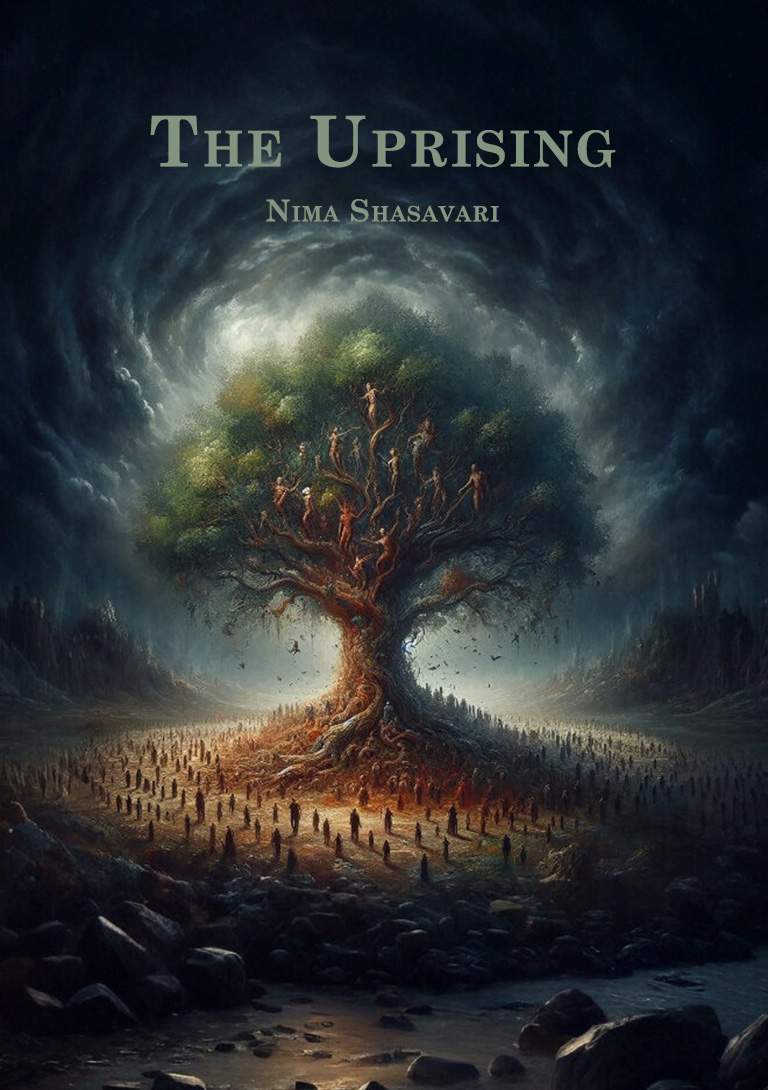
This work is an intrinsic part of the public heritage of Janism. Grounded in the philosophy of cognitive equality, access to this content for download and distribution is completely free and open. Reproduction and sharing are encouraged, provided the authenticity of the words and the spirit of the text remain unaltered—a true ethical action on the path toward awakening.
While the original Persian corpus is fully complete, English editions are being translated and published progressively. As soon as each book or poetry collection is translated, its digital edition becomes immediately available for free public download.
You can actively take part in this global dissemination of Janism philosophy. If you wish to support us in translating, proofreading, or expanding these foundational texts, your collaboration is warmly welcomed.
To accelerate global access, advanced artificial intelligence tools have been utilized in translating initial drafts. Consequently, minor textual flaws or nuances may exist. Ongoing human reviews and community corrections are continuously refining the editions.
Nima Shahsavari
Nima Shahsavari has pursued writing since the age of 15 as a means to question structures of power and explore the concepts of freedom. His works, ranging from poetry to analytical essays, are grounded in the philosophy of "Janism" (the intrinsic value of all living beings) and the equality of all sentient entities. Believing in universal access to knowledge, he distributes his writings freely, bypassing commercial cycles. By replacing paper with digital publishing, Shahsavari strives to ensure his words echo as a pulse for redefining life without harming nature.
In the name of the sole freedom of all living beings
I deemed it my duty to ensure such an inscription appeared at the dawn of this treatise. Nima Shahsavari rose to write, inviting minds to liberation. I considered it a dishonor to commercialize my struggle through this path or stain this pure endeavor with material wealth.
With the aid of modern technology, one need not follow the path of the ancients and consume paper for publication. I have never published my writings upon paper—the life of a tree. If you consider yourself an advocate of freedom, you will not commit slaughter against nature.
Hoping for the freedom and liberation of all living beings
Composed in Winter 2008

Explore The Uprising by Nima Shahsavari. A radical poetic manifesto of rebellion against dogmatism, divine tyranny, and anthropocentric violence...
Equality, Freedom, Critique of Power
Open-Access Digital Heritage
To engage with The Uprising is to cross a threshold where poetry becomes an instrument of existential insurrection. The collection introduces the concept of sacred blasphemy, transforming dissent against entrenched dogmas into a noble faith in true liberation. Nima Shahsavari systematically dismantles the theological frameworks that have long been weaponized to justify subjugation, proving that authentic spiritual awakening requires a fearless interrogation of inherited power.
At the philosophical core of these verses lies an unyielding critique of the machinery of mass servitude and ideological conditioning. The poetry exposes how societal structures function as breeding grounds for obedience, branding human beings with the chains of unchosen creeds from birth. Against this backdrop, the right to dissent and the courage of intellectual awakening are elevated to the highest tier of human dignity.
The work deeply integrates social justice with ecological ethics, unmasking the theological roots of predatory violence against non-human life and ecosystems. Plant-based living is presented not as a superficial dietary choice, but as an essential practice of global peace and an absolute rejection of the bloody economics that govern modern civilization.
Ultimately, The Uprising serves as a clarion call for an epoch of complete moral and structural renewal. By shattering the tyrants of the mind and anchoring every stanza in the sacred ethics of Janism, the work proves that outer liberation is impossible without first breaking the internal chains of fear and dogma.
Throughout history, religious and political institutions have utilized sacred authority to establish an unchallengeable monopoly over human thought. In The Uprising, Nima Shahsavari shatters this monopoly, forging epic poetry into an unyielding weapon of radical critique. The collection confronts the theological structures that have transformed the concept of divinity into an instrument of terror, hierarchy, and systemic subjugation. Here, poetry ceases to be a passive aesthetic exercise; it becomes an active, destabilizing insurrection designed to awaken the dormant human spirit and dismantle the pillars of absolute authority.
The central premise of this poetic manifesto is the radical notion of sacred blasphemy. Far from being an expression of nihilism, true dissent against corrupt theological decrees is reframed as the ultimate form of faith in human dignity and existential freedom. By challenging the edicts that enforce inequality and violence, the verses clear away the debris of centuries of dogmatic oppression, making space for a renewed, life-centered understanding of existence.
A major focus of the collection is the merciless critique of institutionalized breeding and indoctrination systems—what the text conceptualizes as the machinery of cultural reproduction. Under authoritarian conditions, human societies often function to mass-produce obedient subjects rather than free individuals. Shahsavari targets the imposition of unchosen religious and national identities upon infants, arguing that inherited dogmas represent a form of intellectual imprisonment.
In response to this inherited coercion, the poetry champions the sacred right to doubt, question, and apostatize. Freedom is portrayed not as a gift handed down by benevolent rulers, but as a hard-won psychological and philosophical breakthrough achieved through the deliberate shattering of internal mental idols. Every individual must undergo a profound intellectual uprising to reclaim their sovereignty from the state and the pulpit.
The Uprising refuses to divorce poetic expression from historical reality, directly addressing the bleeding wounds of collective memory and state violence. Memorializing sites of historical tragedy and resistance, the collection reframes these locations not merely as graves of the fallen, but as eternal seeds of future awakening. The pain of historical oppression is channeled away from cycles of blind revenge and toward the construction of a humane planetary order.
This vision of a renewed society is intrinsically tied to the philosophy of Janism. The collection draws an unbroken line between political tyranny and ecological slaughter, demonstrating that a civilization that normalizes the destruction and consumption of non-human life will inevitably turn the exact same machinery of violence against human beings. Ethical green living and non-harm are thus established as foundational requirements for true social justice.
Toward its climax, the poetic journey transcends nationalist boundaries, pointing toward a borderless global home where power is decentralized and no sentient life is sacrificed for ideological utility. The weapon of peace, fueled by radical empathy and rigorous critique, replaces the instruments of war and domination.
In strict alignment with its revolutionary philosophy, the publication of The Uprising is maintained as an uncompromising moral act. Rejecting the physical destruction of forests for paper and the toxic industrial footprints of traditional publishing, the author has chosen to release the work exclusively in an open-access, digital format. This ensures that even in the propagation of revolutionary poetry, no living tree is sacrificed to awaken human minds.
Ultimately, The Uprising stands as a towering achievement in critical literature. By weaponizing epic verse against divine and earthly tyranny, dismantling the mechanisms of inherited servitude, and anchoring every stanza in the absolute reverence for life, Nima Shahsavari offers an unforgettable reminder that true structural change begins only when humanity breaks the tyrant within.

Explore The Uprising by Nima Shahsavari. A radical poetic manifesto of rebellion against dogmatism, divine tyranny, and anthropocentric violence...
برابری، آزادی، نقد ساختارهای قدرت
ارجاع علمی و ادبی به آثار
سپاس از همراهی شما. نسخهای از تاییدِ ارسالِ این پیام به ایمیل شما فرستاده خواهد شد.
در صورتی که پرسشِ شما نیازمندِ بررسیِ دقیق یا درجِ اطلاعاتِ تکمیلی باشد، همکارانِ ما در اسرع وقت با شما ارتباط برقرار خواهند کرد.
گزارش شما با موفقیت در پایگاهِ دادههای ما ثبت گردید.
به زودی ایمیلی جهتِ تاییدِ دریافت، به نشانیِ شما ارسال خواهد شد. در صورت نیاز به بررسی دقیقتر، با شما تماس خواهیم گرفت.
سپاس از همراهی شما. نسخهای از تاییدِ ارسالِ این پیام به ایمیل شما فرستاده خواهد شد.
در صورتی که پرسشِ شما نیازمندِ بررسیِ دقیق یا درجِ اطلاعاتِ تکمیلی باشد، همکارانِ ما در اسرع وقت با شما ارتباط برقرار خواهند کرد.
Thank you for your engagement. A copy of this confirmation has been sent to your email address.
If your inquiry requires detailed review or further correspondence, we will get in touch with you shortly.
معرفی کوتاه از خودتان که برای همه کاربران قابل مشاهده است
کشور: فقط مدیران میبینند • تاریخ تولد: به صورت سن نمایش داده میشود
انتخابهای شما دربارهی هستی، اخلاق و جامعه - همیشه قابل تغییر
لینک شبکههای اجتماعی و وبسایت شما در پروفایل عمومی نمایش داده میشوند
ویرایش نام، ایمیل، رمز عبور - امکان فعالیت ناشناس

جامعهای برای گفتوگو، تعالی و رسیدن به آرمانها
همه کاربران میتوانند بدون نیاز به ثبتنام، از آثار رایگان شامل کتابها، کتابهای صوتی و پادکستها استفاده کنند.
فضایی برای گفتوگو، تبادل نظر و مشارکت در مباحث جامعه. تالار گفتمان مکانی است برای:
اعضای سایت میتوانند مطالب، مقالات و اشعار خود را در جهان آرمانی منتشر کنند.
جهان آرمانی باورمند به قانون آزادی است. قانونی که یکایک جانداران را برابر میانگارد و آزار به آنان را بزرگترین خطای جهان میپندارد.
قانون آزادی، هرگونه آزار اعم از (آزار فیزیکی، روانی و کلامی) را نهی میکند. هرگونه توهین، تحقیر، تهدید، سرقت آثار دیگران و... نوعی آزار به حساب آمده و با قانون آزادی منافات دارد.
از طریق منوی اصلی سایت، گزینه "ثبتنام" را انتخاب کنید.
نام کاربری و ایمیل معتبر را وارد کنید.
لینک فعالسازی به ایمیل شما ارسال میشود. با کلیک روی این لینک، میتوانید رمز عبور خود را تنظیم کنید.
پس از فعالسازی حساب و تنظیم رمز عبور، میتوانید با نام کاربری و رمز عبور وارد سایت شوید.
برای سهولت بیشتر، میتوانید از طریق حساب گوگل خود در سایت ثبتنام کنید:
پس از ثبتنام، به تالار گفتمان دیالوگ دسترسی خواهید داشت - فضایی برای گفتوگوی سازنده، تبادل نظر و مشارکت در ایجاد تغییرات مثبت در جامعه.
پس از ورود به حساب کاربری، میتوانید از بخش "پروفایل من" تنظیمات زیر را انجام دهید:
برای افزایش امنیت، میتوانید رمز عبور خود را به طور دورهای تغییر دهید.
تصویر پروفایل و بنر شخصی خود را آپلود کنید تا در انجمن و پروفایل شما نمایش داده شود.
امضای خود را برای نمایش در زیر پستهای انجمن تنظیم کنید.
لینک شبکههای اجتماعی خود را اضافه کنید تا در پروفایل شما نمایش داده شود.
نگرش خود را در مورد موضوعات مختلف از جمله مذهب، اخلاق، سیاست و اقتصاد بیان کنید.
همه اعضای جهان آرمانی متعهد به رعایت قانون آزادی هستند. این قانون برابری همه جانداران و ممنوعیت هرگونه آزار را تأکید میکند.
معرفی کوتاه از خودتان که برای همه کاربران قابل مشاهده است.
اطلاعات کشور (فقط برای مدیران) و تاریخ تولد (نمایش به صورت سن).
انتخابهای شما دربارهی هستی، اخلاق و جامعه که همیشه قابل تغییر است.
لینکهای شبکههای اجتماعی و وبسایت شما در پروفایل عمومی نمایش داده میشود.
ویرایش نام، ایمیل، رمز عبور و امکان فعالیت به صورت ناشناس.
لطفاً برای تسریع در رفعِ ایرادات، موارد زیر را در نظر داشته باشید:
https://idealistic-world.com/poetry
در آستانهیِ آگاهی
آگاهی، تنها داراییِ مشترکِ ماست؛ اینجا فضایی برای تکثیرِ این دارایی، فراتر از مرزهایِ انفعال است.
از کلمه تا رهایی
هستهیِ بیداری